Tuck In Books

New-sibling books for toddlers and young children

A new baby. A whole new set of feelings.

A story can give your child somewhere to put the excitement, the questions and the wish that everything could stay the same. Start with a small, familiar moment.

An original read-aloud story, followed by ideas for your own.

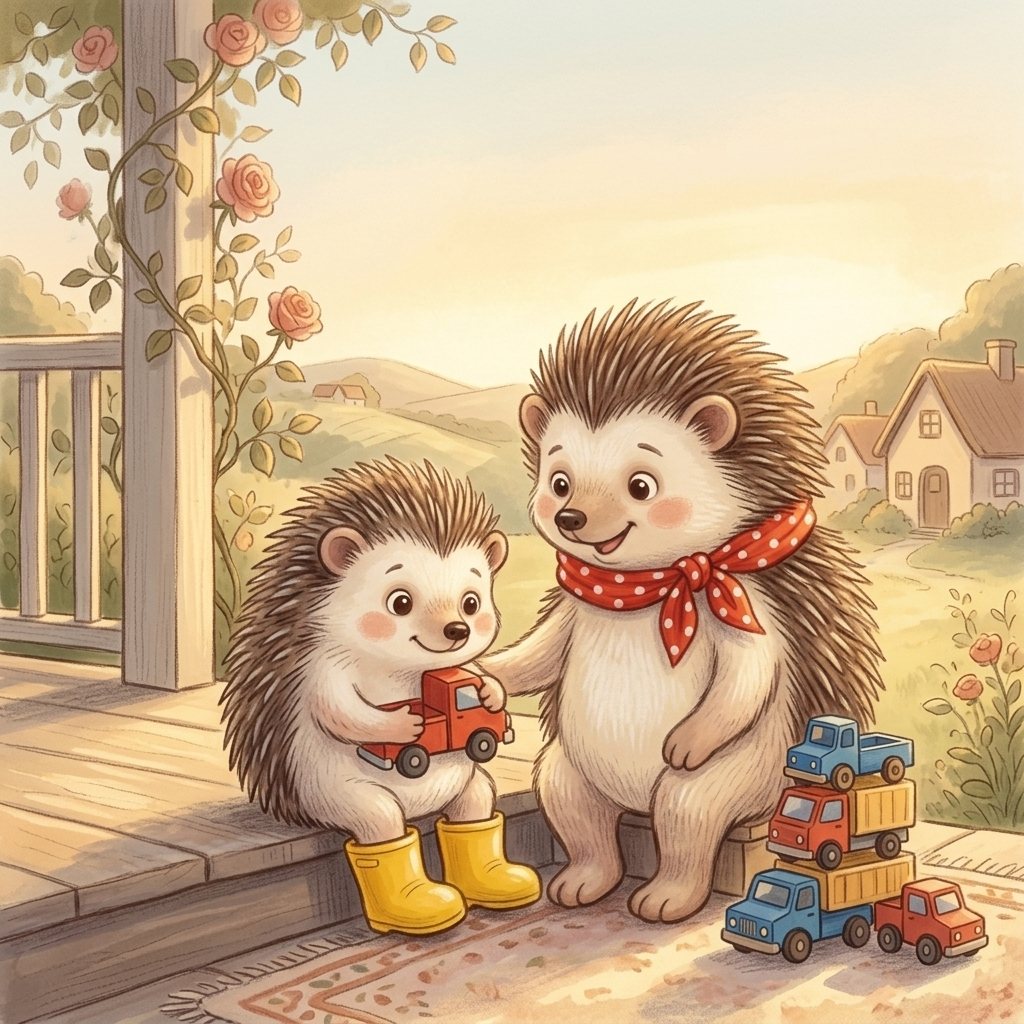
Two hedgehog siblings playing with toy trucks
Choose an original cast for the story you make.

Choose a book for the change your child notices

A new-sibling book does not have to explain everything at once. Your child may be wondering who will do bedtime, why the baby cries or whether their favorite game will still fit into the day. Look for a story with one recognizable concern and adults who listen. A child does not need to finish the story feeling delighted about every part of becoming a sibling.

Make room for mixed feelings

Try a gentle invitation: “What do you think Pip wanted?” Talking about a fictional character can feel easier than being asked to explain your own feelings. Follow your child’s answer, even if it is not the answer you expected. You can read the story again another day without turning each page into a lesson. If the subject feels too close tonight, choose a familiar favorite instead.

A free story to read together

The Little Blue Cup

An original Tuck In Books story about Pip, a cat whose familiar evening changes when a baby arrives.

Pip the cat had a blue cup. It was just the right size for warm milk and just the right size for pretending to be a king. Every evening, Pip and Mama sat by the window with their cups.

Then baby Bean came home. Bean had a tiny blanket, a tiny basket and a very big cry. One evening, Mama put down her cup before Pip had finished telling her about the beetle in the garden.

“Bean needs me,” she said. Pip pushed his blue cup away. “I need you too.” Mama sat beside him. “You do,” she said. “You can be glad Bean is here and still miss how things were.” Pip leaned against her arm.

Papa came to hold Bean. Mama picked up her cup. “Tell me about that beetle.” Pip told her how it had climbed a twig, fallen off and tried again. Mama listened to the whole story.

The next evening, Bean cried again. Pip covered his ears. “Too loud!” Papa helped him find a quieter spot. Pip did not have to hold Bean. He did not have to feel cheerful. He could ask for a little space.

Later, Pip brought his blue cup to the window. Mama brought hers. Bean slept in the basket nearby. “The beetle came back,” Pip said. Mama smiled. “I would like to hear about that.” And Pip began.

The End

Bring the story closer to home

Choose an ordinary detail your child will recognize: a shared chair, a bedtime song, a toy that belongs only to them. Tell the story through an invented animal or person. You can describe a baby joining the family without adding pregnancy or birth details that do not fit your family. The important part is the situation, not making your child responsible for looking after the baby.

A few words to try after reading

“Which part would you want to keep the same?” “Where could Pip go when it felt too loud?” “What would you like a grown-up to understand?” One question is plenty. Your child might point at a picture, make up a different ending or want to hear the beetle part again. Those are all ways to enjoy the story together.

A few questions before you read

What age is this story for?

It is a read-aloud example for families with young children, roughly ages three to seven. A three-year-old may enjoy the concrete moments; an older child may have more to say about them. Choose by your child’s interests and understanding, not age alone.

Does the story have to call my child a big helper?

No. You can ask for a story that makes room for their feelings without giving them responsibility for the baby.

Can I use a story when the baby arrives through adoption?

You can describe the arrival in words that fit your family and ask the story to avoid pregnancy details. Read the preview carefully before sharing it.

More on welcoming a sibling

For age-by-age ideas beyond story time, see UNICEF's guide to preparing your child for a new sibling. The story above is fiction, written for shared reading.